bbdbuy Travel Walking Shoe Cushioning Guide
bbdbuy Travel Walking Shoe Cushioning Guide
bbdbuy Travel Walking Shoe Cushioning Guide
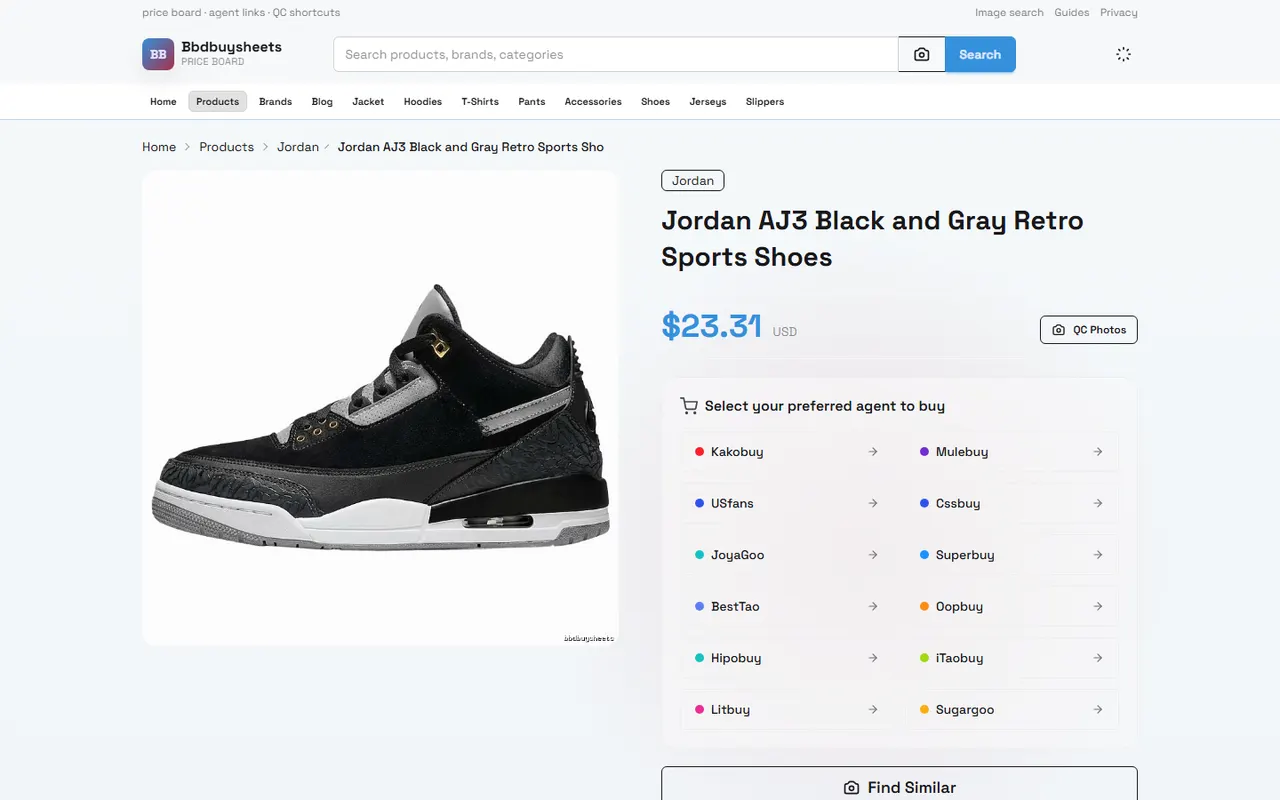
Travel walking shoes are easily misled by marketing words like "soft", "bouncy", and "thick sole". What really needs to be determined first is how far you walk each day, what surfaces you walk on, whether you can accept a softer or firmer feel, and whether you need one pair of shoes that can handle airports, city walking, and light slopes.
This article is for buyers who are preparing to filter travel walking shoes on the bbdbuysheets.com spreadsheet. After reading, you can build a shortlist, record evidence about the outsole, midsole, upper, and sizing, and decide what information still needs to be verified on the product page or with QC images. This article is not a substitute for foot medical advice, and does not infer actual wearing experience from product images.
The judgments involving product names, prices, inventory, sizing, materials, sellers, shipping, and link status in the article should be based on the product page reopened before publication. The method verification date for this article is September 21, 2026; where no specific product page evidence is provided, no current product facts are concluded.
First Clarify Daily Walking Distance and Surfaces During Travel
Don't start by filtering for "more cushioning is better". The amount of walking during travel usually changes with attraction density, transportation methods, and luggage arrangements. The same pair of shoes does not have the same requirements for short-distance shopping and consecutive days of city walking.
You can first divide your daily walking plan into three levels:
Low volume: mainly transportation connections, malls, and short sightseeing, the focus is on being lightweight, easy to match, and not causing blisters.
Medium volume: need to walk continuously for several hours a day, the focus is on cushioning, stability, upper wrap, and forefoot flex.
High volume: long hours walking on hard surfaces every day, the focus is on foot pressure management, heel stability, in-shoe space, and spare shoe arrangements.
Surfaces should also be recorded separately. Airports and malls are mostly flat hard ground; old towns may have stone roads, steps, and slopes; parks or scenic areas may have gravel, wet ground, or irregular surfaces. A thicker outsole does not mean better grip, and a soft midsole does not mean more stable on slopes.
If the route includes rain, long stairs, or uneven surfaces, the candidate shoes should at least check the outsole tread, heel fixation, and upper coverage. When the product page doesn't have this information, mark it as "to be verified" and don't use marketing titles to fill in evidence. 🗺️
Distinguish Soft Feel, Energy Return, and Long-term Comfort Needs
Soft, energy return, and comfort are three different concepts.
Soft usually describes the immediate feeling when your foot presses down; energy return describes the feeling of the midsole recovering and pushing after compression; long-term comfort is also affected by last type, in-shoe width, upper pressure, heel lock, shoe weight, and foot shape differences. Comfort after wearing cannot be confirmed from just one product image.
You can use the following logic when screening:
Like soft feel: prioritize checking midsole material descriptions, insole thickness, and in-shoe space, avoid only looking at the outsole appearance.
Need walking feedback: pay attention to forefoot flex point, shoe weight, and midsole structure, excessively soft shoes may also make some buyers feel insufficient support.
Prone to toe pressure: prioritize checking the size chart, foot length measurement method, and toe box shape, don't just order based on your usual athletic shoe size.
Prone to heel slipping: check the heel cup, number of eyelets, and collar structure; if the product page doesn't have these details, keep the uncertainty.
Planning to wear for multiple consecutive days: include shoe weight, breathability, drying speed, and spare shoe position in the selection.
Do not treat "cloud-like feel", "all-day comfort", or "professional cushioning" as verified performance. These words can only serve as search entry points, ultimately returning to visible information on the product page, specification fields, and necessary QC images.
Need | Priority information to verify | What still cannot be directly confirmed |
|---|---|---|
Long-term city walking | Outsole structure, shoe weight, forefoot flex, size chart | Actual fatigue level |
Prefer soft feel | Midsole and insole description, outsole thickness | Personal subjective comfort |
Need stability | Heel structure, outsole tread, lace fixation | Real grip on wet ground |
Wider foot type | Toe box shape, available widths, size measurement method | Pressure after wearing |
Check Outsole Thickness, Midsole Structure, and Forefoot Flex Information
Outsole thickness can help judge the structure but cannot alone represent cushioning effect. Thick-soled shoes may have a more obvious foot height, but may also bring trade-offs in weight, stability, or luggage space. Thin-soled shoes may be lighter and easier to fold, but whether they are suitable for long-term hard ground walking still needs to be combined with midsole and insole information.
It is recommended to record the following for each candidate in the spreadsheet:
Whether the outsole or midsole has a clear material description.
Whether outsole thickness, heel height, or heel-to-toe drop is published.
Whether the forefoot can flex naturally and whether the flex point matches the toe activity area.
Whether the outsole tread covers the main force-bearing areas.
Whether the upper has obvious support panels, ventilation holes, or weak areas prone to wear.
Whether the specifications come from product page text, not just inferred from the main image.
If the product image uses exaggerated angles, making it difficult to judge the thick sole proportions, record "insufficient image" and don't estimate centimeters yourself. If different images show inconsistent outsole tread, upper stitching, or shoe labels, postpone comparison and first confirm whether it is the same product or version.
Forefoot flex is especially worth noting. Travel walking shoes need to maintain a relatively natural gait on steps, turns, and fast walking, but pages usually do not provide standardized flex tests. What can be done is to record whether the image shows forefoot segmentation, outsole grooves, or flexible structures, and clarify that this is only appearance evidence, not a wearing test result. 👟
Filter Shoe Types by Luggage Space, Matching, and Rotation Frequency
The choice of travel shoes is not only about foot feel, but also affected by luggage space and usage scenarios. If a pair of shoes can only match one type of clothing, or must occupy a lot of space alone, its actual travel value may be lower than a more ordinary but more versatile shoe type.
You can filter from three perspectives:
First is luggage space. Thicker-soled, stiffer-structured styles usually require more storage space and may squeeze clothes when folded. If you plan to bring only one pair, prioritize confirming whether it is suitable for airports, city walking, and light casual scenes; if you plan to bring spare shoes, calculate the extra weight and storage volume.
Second is matching compatibility. Neutral colors, low decoration, and simpler uppers are usually easier to match with multiple outfits, but this is only an appearance judgment and cannot infer material grade or durability. The colors in product images may also be affected by lighting and display devices, so keep a margin between color names and actual effects.
Third is rotation frequency. When walking at high intensity for multiple consecutive days, rotating shoes may help reduce sustained pressure on a single area, but it increases luggage weight and purchase cost. If only planned for short-term use, excessively pursuing complex structures may not be necessary.
In the candidate table on bbdbuysheets.com, you can add five fields: "primary use", "estimated daily walking duration", "whether bringing spare shoes", "luggage space constraints", and "issues to verify". This way, you compare a complete travel solution, not a single marketing word. 🧳
Which Cushioning Claims Still Need Product Page Evidence Support
The following information cannot be confirmed solely from titles or main images:
Whether "maximum cushioning" corresponds to a clear midsole material or structure.
Whether "suitable for all-day walking" has verifiable specification basis.
Whether outsole thickness, weight, and heel-to-toe drop actually correspond to the current product version.
Whether the upper is a specific material, includes lining or composite layers.
Whether the shoe is suitable for rain, wet ground, long slopes, or irregular surfaces.
Whether sizing is marked by foot length, inner length, or other measurement methods.
Whether current inventory, color, price, and seller information are still valid.
When the product page only has promotional words without specifications, write the conclusion as "insufficient information, needs further verification" instead of "this shoe has good cushioning". If multiple candidates lack the same fields, it means the current comparison can only stay at the level of appearance and page claims, and cannot form a reliable performance ranking.
Before purchasing, also record the destination country, currency, and applicable conditions. Prices, shipping, taxes, return/exchange windows, and route restrictions may change, and one page display cannot be treated as a long-term promise. Combining or splitting packages should not only look at shoe unit price: shoe box volume, package weight, route restrictions, and single loss risk may change the final choice. 📦
Use Product Images and QC Images to Verify Outsole and Upper Condition
Product main images are suitable for confirming style and appearance, while QC images are more suitable for checking the visible upper, outsole, size label, and obvious defects in the current order. The two cannot replace each other, nor can you treat illustrations as evidence of having received the product.
When checking, record in the following order:
Verify that the left and right shoes are the same style, color, and structure.
Check whether the outsole tread has obvious gaps, indentations, warping, or contamination.
Check the upper stitching, sewing, glue edges, and decorative parts for visible abnormalities.
Verify whether the size label or packaging information matches the order record.
Check whether the photos are clear enough and the angle sufficient to judge issues, mark as insufficient evidence if not.
Save problem descriptions and corresponding images to avoid just writing "looks fine".
QC images can only help find conditions visible in the photos and cannot prove that the shoes are comfortable to wear, have adequate cushioning performance, or fit your foot type. If obvious problems appear in the images, apply for further processing according to the platform's handling window based on the actual situation, and do not change the record by editing images or covering defects.
Any order screenshots, shipping labels, or logistics images should cover name, address, phone, order number, and payment information. Public examples only show the product status necessary to complete the judgment, without displaying personal sensitive information.
Travel Walking Shoe Purchase Checklist
Before ordering:
Have written down the estimated daily walking distance or duration.
Have recorded the main surfaces and weather conditions.
Have distinguished softness, energy return, and stability needs.
Have checked the product page name, specifications, size, and currently visible information.
Have recorded price, currency, shipping, taxes, and verification date.
Have confirmed that color, size, and seller information are not inferred solely from the title.
Have calculated the impact of shoe box, shoe weight, and spare shoes on luggage space.
When submitting QC or rechecking:
Upper, outsole, size label, and left/right shoes can be verified in images.
Found problems have corresponding images and clear descriptions.
Do not treat main images, historical images, or incomplete screenshots as current order evidence.
Do not disclose address, phone, order number, and payment information.
Keep a "to be verified" mark for cushioning, comfort, and slip resistance that cannot be confirmed.
Before shipping:
Reconfirmed product status and size.
Compared total cost, volume, route restrictions, and loss risk for combined vs split packages.
Understood possible declaration, taxes, and import restrictions for the destination country.
Saved necessary information for logistics tracking, but did not disclose the full shipping label.
Confirmed after-sales handling window and required evidence.
Next Steps: Finalize Candidates and Record Recheck Results
It is recommended to select two or three candidates first, rather than ordering directly by "strongest cushioning". Record the same fields for each shoe: visible evidence on the product page, missing information, suitable walking scenarios, luggage impact, sizing risks, and QC recheck results. This way you can see whether the candidates truly differ, or just have different title wording.
Savings should be calculated based on actual total cost, including product price, domestic or platform-related fees, international shipping, possible taxes, and return/exchange costs. Thicker, more complex, or heavier shoe types may incur higher luggage occupancy and shipping costs; lighter, thinner shoe types may involve trade-offs in long-term hard ground walking or support needs. Suitable for those who often walk in cities, are willing to verify specifications, and can accept the recheck process, can adopt this evidence-first screening approach.
It is not recommended to make decisions solely based on promotional words in the following situations: the product page has no clear sizing basis, current inventory or price cannot be confirmed, QC images are insufficient to judge key issues, destination country routes or taxes have not been verified, or the buyer has foot pain, injury, or special support needs that require professional evaluation.
Finally, mark the status of "verified", "to be verified", and "not adopted" in the bbdbuysheets.com spreadsheet, and note the last verification date. Only when the candidate's key evidence, budget, luggage constraints, and after-sales conditions all correspond can you proceed to the next step of the purchase process.
Agent Platform Shopping FAQ
1. What categories of products appear in the spreadsheet on bbdbuysheets.com?
The spreadsheet provided by this platform covers shoes, clothing, handbags, fashion accessories, sweatshirts, perfumes, hats, scarves, belts, and various household daily items.
2. What are the benefits of using the spreadsheet on bbdbuysheets.com?
Since agent platforms usually do not display products directly, you need to use the spreadsheet to find items you like and get purchase links. You can also seek help on Reddit or Discord, where recommended products are often excellent, but the entire selection process can be quite slow. These spreadsheets are generally compiled from long-term collection of information on these platforms.
Browse our latest products and find your next favorite item.