bbdbuy Shoes for Standing Work
bbdbuy Shoes for Standing Work
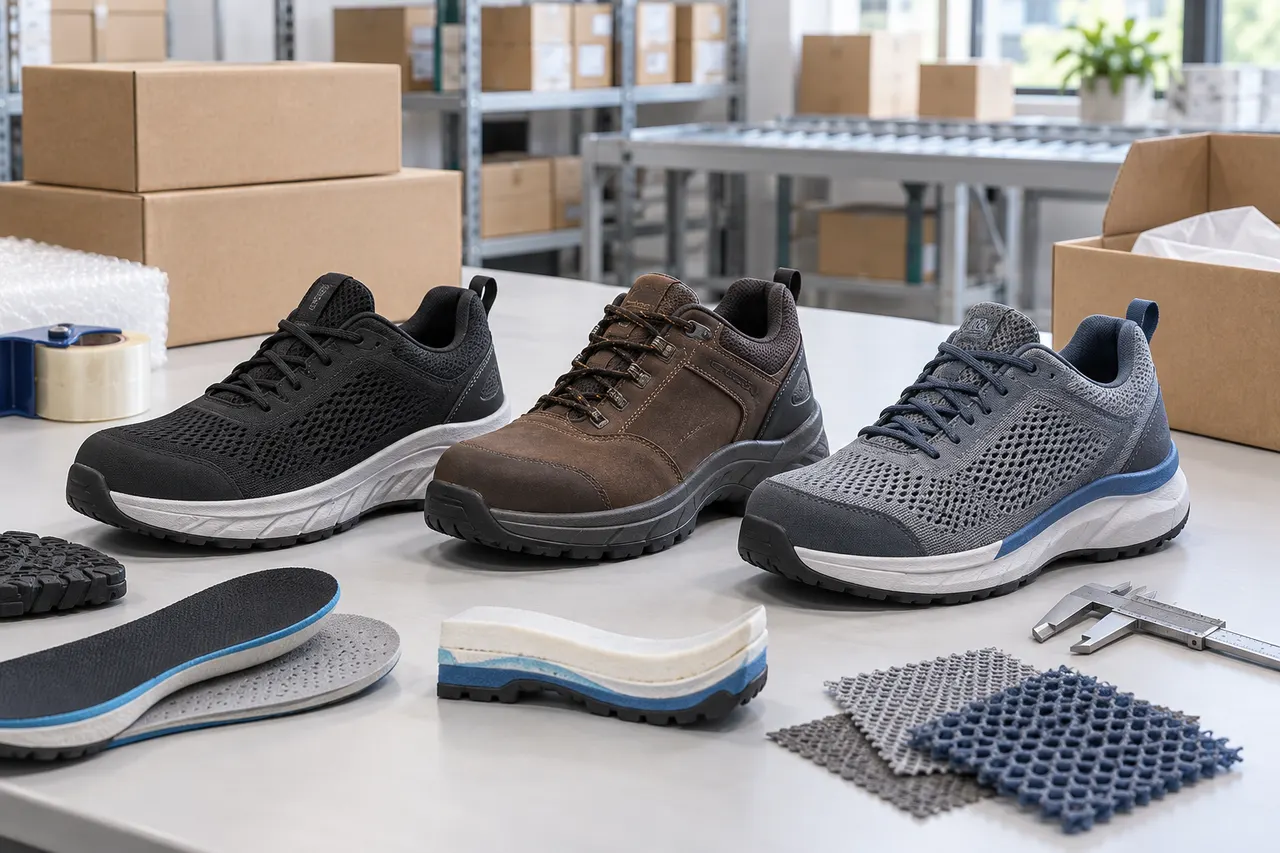
Shoes for standing work cannot be judged solely by "cloud-like cushioning" or appearance. Standing 6 hours, 8 hours, or 12 hours a day demands completely different requirements for sole rebound, heel lockdown, forefoot space, and breathability. bbdbuysheets.com is more suitable for organizing candidate items and verifying before purchasing: first collect styles, images, specifications, and seller information in a spreadsheet or product page, then use pre-order visible information and subsequent QC photos to confirm whether it's worth shipping.
This article is for those choosing work shoes, chef shoes, warehouse shoes, store standing shoes, or commuter/work hybrid shoes through bbdbuy. It is not a substitute for advice from a doctor, podiatrist, or workplace safety regulations; if your workplace has mandatory slip-resistant, toe-protective, insulated, anti-static, or uniform requirements, you should first filter according to job standards before considering comfort.
Define daily standing duration and work surface first
Don't rush to open a bunch of links and compare looks. The core issue of standing shoes is: what surface are your feet on, how long are they continuously bearing weight, and is there frequent walking and turning.
Start by writing your scenario in one sentence:
I stand about 8 hours a day, mostly on hard tile or concrete, occasional lifting, need stable, slip-resistant shoes that don't squeeze the forefoot and don't get too stuffy.
This sentence is more useful than "want to buy comfortable shoes." Because soft soles may feel comfortable in short try-ons, but after long standing, if the midsole collapses, the heel is too loose, or the upper lacks support, the soles and calves get more tired. Conversely, a highly supportive shoe with a thick upper, tight toe box, and poor breathability can make toes and insteps uncomfortable.
It's recommended to layer by standing duration:
Under 4 hours: prioritize lightweight, breathable, and easy walking.
4–8 hours: consider both cushioning and support, not just softness.
Over 8 hours: heel lockdown, stable sole platform, replaceable insole, and ease of cleaning all matter.
Wet or greasy surfaces: confirm slip resistance and sole tread first, then appearance.
Hot kitchens, warehouses, or outdoors: breathability and easy cleaning usually trump heavy padding. 🧾
Categorize candidate shoes into soft cushioning, stable support, and breathable lightweight
When choosing shoes on bbdbuy, it's best not to compare all candidates together. First divide them into three categories, then see which fits your work scenario better.
Soft cushioning models typically have thick midsoles and obvious foam feel, suitable for short to medium standing on hard surfaces, but beware of being too soft, too tall, or laterally unstable. Stable support models usually have wider sole platforms and more complete heel wrapping, suitable for long standing and walking transitions, but may be heavier and stuffier. Breathable lightweight models suit hot environments and those who move frequently, but if the midsole is too thin, long standing on hard surfaces will test foot endurance.
Type | Key factors | Main risks | Better for |
|---|---|---|---|
Soft cushioning | Midsole thickness, rebound description, sole ground width | Too soft, collapsing, lateral wobble | Hard surfaces, mixed standing/walking, easily tired soles |
Stable support | Heel wrap, sole platform, upper structure | Heavy, stuffy, rubbing | Long shifts, turning and lifting, needing ankle stability |
Breathable lightweight | Upper perforations, mesh area, weight feel | Insufficient cushioning, weak support, hard to clean | Hot environments, commuter/work hybrid, sweaty feet |
This classification is not a brand ranking or quality guarantee. It just helps reduce misjudgment: don't compare a thin breathable shoe to a thick cushioned shoe for "step feel," and don't use a soft shoe to replace a work shoe that requires slip resistance or protection.
Compare forefoot space, heel lockdown, and sole platform
Feet swell during long standing, so forefoot space matters more than static sizing. In product photos, focus on toe box width, pressure points on the upper, tongue thickness, and lacing system. If the toe box is noticeably narrow or pointed, or there are hard overlays above the forefoot, those with wide feet or high insteps should be cautious.
Heel lockdown determines if the shoe drags. A too-soft heel counter, low collar, or too few eyelets can cause the foot to slide forward and back. In standing work, internal sliding increases friction and makes toes constantly hit the toe box.
The sole platform determines stability. Midsole thickness alone isn't enough; look at the ground contact area. A tall thick sole with a narrow base may feel wobbly when standing; a wider platform is usually more stable but looks bulkier.
Before ordering, check item by item:
Forefoot: Is the toe box sufficiently round and wide? Are there obvious pressure seams?
Upper: Is the proportion of mesh, leather, or synthetic materials suitable for the work environment?
Heel: Is there a complete heel counter? Does the collar secure around the ankle?
Sole: Does the outsole have clear tread? Is the platform slightly wider than the upper?
Laces: Can they be adjusted, rather than relying on slip-on fit?
Insole: Is it removable? Can it be replaced with a more suitable standing insole later? 👟
Use product photos and QC photos to check upper, insole, and midsole edges
In the bbdbuy process, product photos are only for initial screening; QC photos are more suitable for pre-shipment review. Product photos often emphasize aesthetic angles, while QC photos help confirm actual color, shape, left-right symmetry, sole condition, and obvious defects.
When reviewing QC photos, don't just look at the front. Focus on these areas:
Upper creases: Are there noticeable dents, deformations, or glue marks on new shoes?
Toe height: Are left and right toe boxes consistent? Is one side collapsed?
Heel position: Is the heel tilted? Is the collar obviously deformed?
Midsole edges: Is glue overflow severe? Are edges cracked or separated?
Outsole tread: Any wear, dirt, broken tread, or left-right inconsistency?
Insole and lining: If visible in QC photos, check if the insole is flat and the lining has loose threads.
If photo angles are insufficient, request clearer angles before shipping, such as sole, heel, top-down toe, and inner label. Don't wait until after international shipping to find sizing or defect issues, because cross-border returns are much more troublesome than domestic shopping.
Build a trade-off table for standing shoes: comfort, heat, stability, and cleaning
Standing shoes rarely excel in all four areas: soft, stable, breathable, and easy to clean often conflict. Thick midsoles may cushion more but are heavier; large mesh areas breathe better but are harder to clean and less splash-resistant; leather or synthetic leather is easier to wipe but stuffier; wide platforms are more stable but not always suitable for narrow feet.
Create a simple record for each candidate shoe, no need for complex scoring, just write down the trade-offs clearly.
Check item | Low-risk signals | Caution signals |
|---|---|---|
Comfort | Wide forefoot, removable insole, midsole not overly soft | Narrow toe box, upper pressure, only emphasizing soft bounce |
Heat | Breathable mesh or ventilation structure | Fully wrapped thick upper, very thick lining |
Stability | Complete heel, wide outsole platform, adjustable laces | Tall thick sole but narrow ground contact, weak slip-on fit |
Cleaning | Easy-wipe surface, tread not too deep | Large light-colored mesh, many complex overlays |
If your work environment requires frequent cleaning of shoe surfaces, light-colored fabric shoes may not be suitable. If you sweat a lot daily, closed leather may make long shifts uncomfortable. The real choice is not "which is best," but which drawbacks you can accept.
Who should not only pursue soft foot feel
Soft foot feel is attractive for ordering, but not all standing scenarios suit soft shoes. The following people especially should not only look at cushioning:
Those whose ankles wobble easily or who overpronate/supinate when walking.
Those who need to turn, lift, and climb stairs frequently at work.
Higher body weight individuals, whose soles may collapse under pressure.
Those working on slippery surfaces needing stable grip.
Those already experiencing foot, knee, or back discomfort and needing professional advice.
Such users should prioritize stable support in the first filter. Soft midsoles can be a bonus, but not at the expense of heel lockdown and sole platform. Especially tall thick-soled shoes with insufficient lateral support may cause more fatigue than regular shoes when standing long. ⚠️
Verify sizing, specifications, links, and return boundaries before ordering
When choosing work shoes through bbdbuy, the most common issues aren't comfort judgments in articles, but sizing and specifications. Different sellers may use Chinese, European, US, or centimeter insole length descriptions, and product pages may have differences in color, version, men's/women's, and width.
Before ordering, at least check these:
Does the size chart specify foot length or insole length, not just generic sizes?
Do the selected color, version, and shoe type match the main product image?
Is the product link still accessible? Have the title and specs changed?
Are there clear return windows, defect handling, and seller restrictions?
Does the work scenario require slip resistance, toe protection, waterproofing, or other certifications?
Could international shipping, volumetric weight, and destination taxes push total cost over budget?
Shoe boxes add volume and weight but sometimes protect shoe shape; don't assume removing the box is always cheaper. If shoes are expensive and uppers easily deform, keeping the box may be safer. For cheap lightweight shoes, compare volume and deformation risk after removing the box, then decide whether to consolidate.
Select final candidates and keep review records
Don't keep too many candidates. Choose 2–3 pairs for final comparison: one more cushioned, one more supportive, one more breathable. Then rank by your work scenario, not by how good the photos look.
A practical decision order:
Exclude shoes that don't meet work safety requirements.
Exclude shoes with unclear size charts, insufficient link info, or messy specs.
Keep shoes with more credible forefoot space and heel lockdown.
Compare midsole thickness, outsole platform, and breathability/cleaning trade-offs.
After ordering, use QC photos to review actual condition, then decide whether to ship. ✅
Save product links, title screenshots, size selection, color specs, order time, QC photos, and final judgment. That way, if disputes arise over size, color, defects, or after-sales, you can quickly refer to your basis instead of communicating from memory.
The conclusion is simple: bbdbuy standing work shoes are not about choosing the softest pair, but the pair that best fits your work surface, standing duration, and foot shape limitations. Soft cushioning reduces hard surface impact but may cause instability; stable support reduces wobble and fatigue but may be heavier and stuffier; breathable lightweight suits hot environments but may sacrifice cushioning and cleaning ease. This comparison method is most suitable for buyers who stand long hours daily, are willing to carefully review QC photos before shipping, and keep records. It is not recommended for those whose workplace has mandatory safety shoe standards, those with existing foot pain who hope ordinary shoes will solve it, or those who just want to order quickly based on looks. 🧩
Agent Platform Shopping FAQ
1. On bbdbuysheets.com, what is the best way to find a product I want to buy?
You can locate products on bbdbuysheets.com by entering one keyword or by browsing the category pages, which also sort items by brand. Shorter search phrases usually bring back more results than longer ones, but longer phrases are more accurate. For instance, try searching for "Air Force 1 White," "sneakers," or simply "Air Force 1."
2. How should I inspect QC photos on bbdbuysheets.com?
When you review QC photos on bbdbuysheets.com, pay attention to the particular features of your purchased item. For shoes, inspect essential spots like the toe, heel, and tongue to evaluate stitching, overall shape, and tongue thickness to determine if the pair is well made. For clothing, check the neck label, logo embroidery, material, and the neatness of the collar and cuffs, along with other details.
3. What are QC photos on bbdbuysheets.com?
Every drop-shipping service, including bbdbuysheets.com, employs a quality control team. When your items reach the bbdbuysheets.com warehouse, staff inspect them and capture QC photos. Typically three photos are taken, and they confirm the color, size, specs, and quantity match your order while also looking for defects. This does not cover electronic products, which only receive an exterior check. If defects or wrong size/color are found, the team immediately returns the goods to the seller. This process helps ensure you receive high-quality products.
Browse our latest products and find your next favorite item.